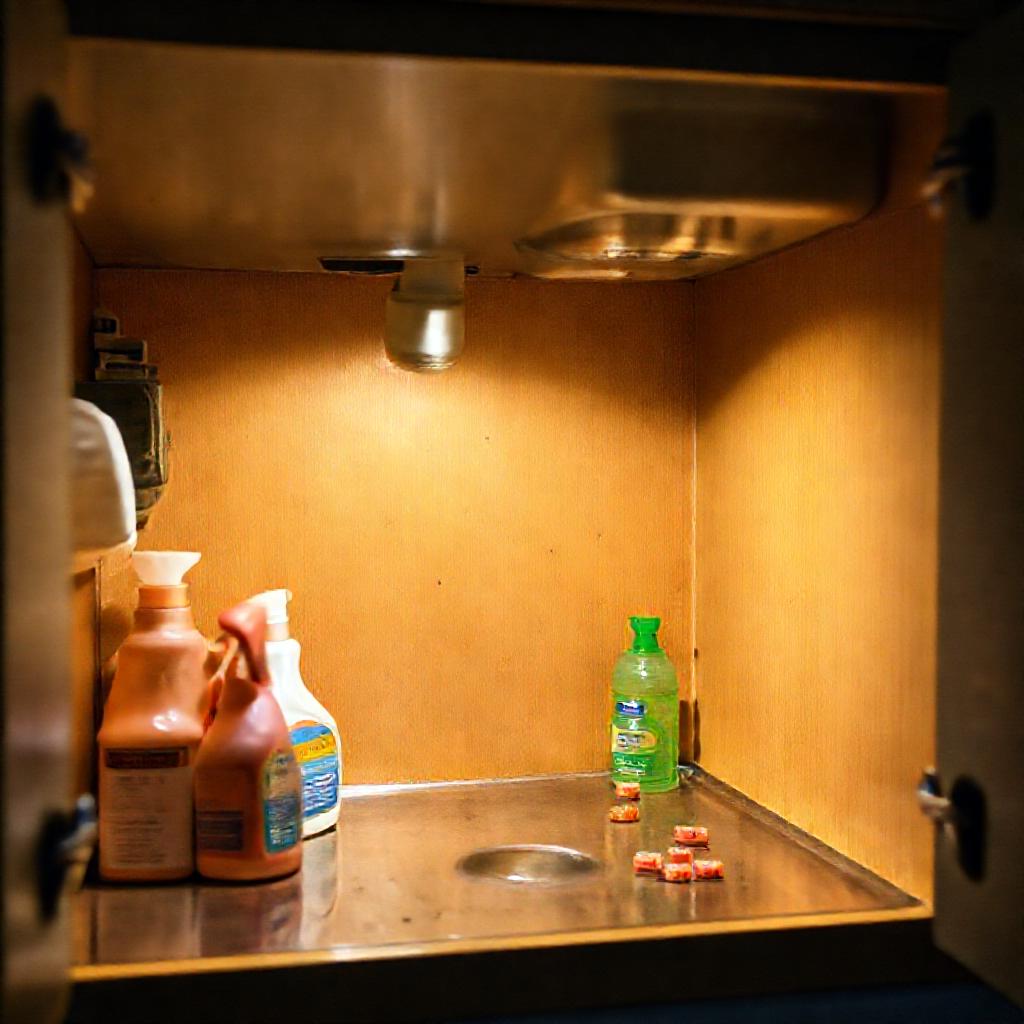
Short answer: cut off water and food first, then apply gel bait in the cracks where roaches actually live, and skip foggers. With a consistent gel bait like Advion, a German roach colony often collapses in one to three weeks—not overnight, whatever the internet promises.
Step 1: Cut off water and food
Roaches can survive about a month without food, but only about a week without water. That makes water control the fastest way to put pressure on an infestation. Fix dripping faucets, sweaty pipes, and leaking drains. Wipe down sinks and counters before bed, and do not leave pet water bowls out overnight.
On the food side, roaches in a kitchen are usually living on grease film, crumbs, and open packages. Clean behind the stove and refrigerator, empty the toaster crumb tray, and store pantry items in sealed containers. Take trash out nightly, and pick up pet food after feeding time. The goal is to make your gel bait the most attractive food source available.
Step 2: Apply gel bait where they live
Gel bait is the workhorse of roach control. Apply small dabs—about the size of a pea—in cracks, crevices, hinges, under sinks, behind appliances, and along the warm edges where roaches hide. Do not smear it across open counters. Roaches eat the bait and carry it back to the colony, where it spreads to nymphs and adults you never see.
Our review found a 4-tube pack of Advion gel bait typically runs about $27–$31, which is often enough for a kitchen or small apartment. For a fuller comparison, see our guide to the best cockroach bait options. Reapply every two to three weeks until you stop seeing live roaches. Do not spray liquid insecticide over or near the bait; it will contaminate the bait and push roaches away.
Step 3: Do not use a fogger or bug bomb first
Foggers and total-release bombs seem like a fast fix, but they usually scatter roaches deeper into walls, under appliances, and into neighboring rooms or units. That spreads the infestation and makes bait less effective because roaches are hiding farther from the treated cracks. If you already set one off, do not panic—switch to bait, water control, and sealing gaps, and give it a few weeks.
Step 4: Add boric acid dust in the right spots
After bait is down, boric acid can help in dry, hidden areas where roaches travel. Apply a very light dust in wall voids, behind outlet covers, under the refrigerator, stove, and dishwasher. The goal is a thin film roaches walk through, not visible piles. Keep it away from kids, pets, and food-prep surfaces. Boric acid is a powder pesticide, not a harmless home remedy; read and follow the label.
Step 5: Identify the species
German roaches—small, tan, fast, found in kitchens and bathrooms—are the hard indoor case. American and Oriental roaches tend to come from drains, basements, and outdoor harborages. Treatment works better when you know what you are dealing with. If you are not sure, use our pest ID tool before spending money on the wrong product.
Step 6: Renters should not pay alone
In most states, landlords are responsible for pest control in rental housing, especially in multi-unit buildings where roaches are a habitability issue. Put your request in writing and document the problem with photos. If the landlord does not respond or refuses, contact local code enforcement or a tenant rights group. In apartments, roaches move between units, so a single-unit DIY job often fails without building-wide treatment.
When to call a pro
DIY stops being enough when you have controlled water and food, applied gel bait for three to four weeks, and still see roaches daily; when you find them in electronics, wall voids, or multiple rooms; or when you live in a multi-unit building with a source you cannot access. A licensed pro can use better baits, insect growth regulators, and targeted dust in places you cannot safely reach. Costs vary by home size, region, and infestation severity, so check our cockroach control cost breakdown before you commit.
The honest timeline: bait takes one to three weeks to collapse a colony, and a deep German roach problem can take two months of follow-up. Do not chase overnight promises. Cut water, bait the cracks, skip the fogger, and escalate to a pro only when the roaches refuse to leave.