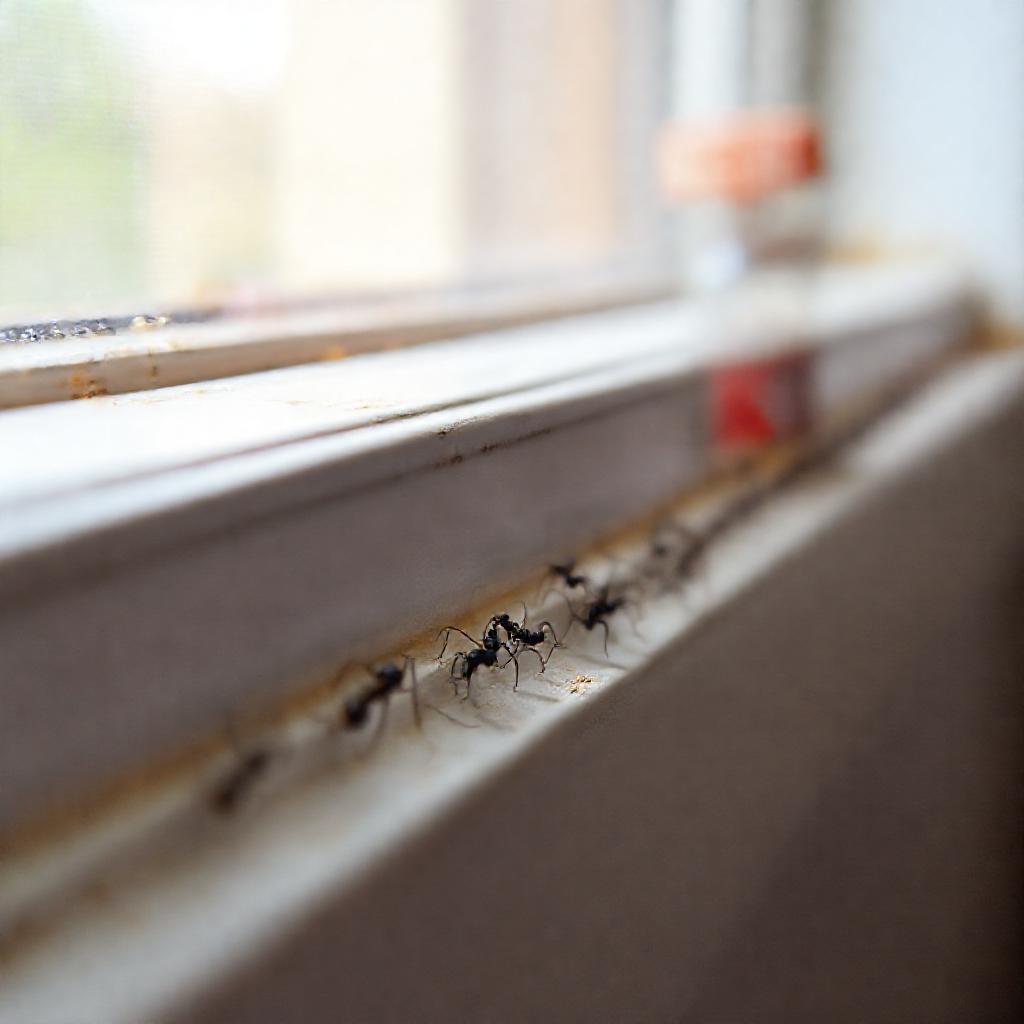
Ants are a colony problem, not a single-file-line problem. The fastest way to get rid of ants in the house and yard is to use a slow-acting bait that workers carry back to the nest, not to spray the visible trail. Spraying kills the ants you see and can trigger the colony to split or move. A good bait program typically takes several days to two weeks because the goal is to kill the queen, not just the foragers.
Start with the Right Bait, Not the Spray Can
The core mistake is using a contact spray on a trail. It kills workers immediately, but the colony stays hidden and often buds into new colonies. Bait works differently: worker ants eat or carry the bait back to the nest, share it with the queen and brood, and the colony collapses from the inside. That takes time, which is why patience matters.
Different ant species want different baits. Odorous house ants and many pavement ants go for sugar or carbohydrate baits. Other ants, especially when a colony is raising brood, switch to protein or grease baits. The same colony can change its preference from one week to the next. If ants ignore a bait after a day or two, try a different formulation rather than assuming bait does not work. Our guide to best ant bait breaks down which active ingredients match which feeding behavior.
Place small bait stations directly on or next to the ant trail. Do not spray the trail with cleaner, vinegar, or repellent sprays while bait is out. You want ants to find and follow the trail to the bait. If you erase the pheromone path, you cut off the route to the colony.
Kitchen Counters: Bait the Trail, Then Seal the Entry
For ants on kitchen counters, start by following a trail back to its entry point. Common entries are gaps around window frames, baseboards, pipes under the sink, or cracks where the backsplash meets the wall. Place bait stations as close to that entry point as you safely can, off food-contact surfaces and away from children or pets.
Clean counters with plain water or mild soap, but skip strong lemon, peppermint, or vinegar sprays directly on the trail. Those can act as repellents and keep ants away from the bait. Wait until ant activity drops noticeably, which usually happens in three to five days but can take up to two weeks for larger colonies. Once the trail has thinned or disappeared, seal the entry point with caulk, expanding foam, or another appropriate material. Do not seal first. If you seal while the colony is still active, ants may find another way inside or begin nesting in the wall.
Yard and Perimeter Bait
Outside, treat visible mounds with a labeled mound bait or granular bait placed around the mound rather than directly on top. Ants should encounter the bait while foraging, carry it back, and feed it to the queen. Drenching a mound with spray or boiling water often fails because the colony can relocate or split into satellite nests.
For perimeter control, place bait stations near the foundation, along known trails, and in shaded areas where ants are active. Keep them out of direct sun if possible and replace them on the schedule listed on the label. Baits that dry out or get washed away stop working.
Pet-safe honesty matters here. Bait stations should be placed out of reach of dogs, cats, and children, such as behind appliances, under heavy furniture, or inside locked outdoor stations. No ant bait is “pet proof” once eaten. Always read the label, keep the product in its original container, and call poison control or a veterinarian immediately if a pet or child ingests bait. Do not scatter loose granules across the lawn where pets can eat them.
Carpenter Ants Are Not the Same Problem
If you see large black ants, sawdust-like frass near wood, or ants inside damp or rotting wood, you are likely dealing with carpenter ants. They excavate wet wood for nesting and will not be controlled by sugar bait alone. The real fix is finding and correcting the moisture problem, then treating the nest directly, often inside wall voids. For a realistic picture of what a pro treatment involves, see carpenter ant treatment cost.
Flying Ants or Termites? Check Before You Panic
Flying ants have a pinched waist, bent antennae, and front wings that are longer than their back wings. Termites have a broad waist, straight antennae, and four wings of equal size. If you are not sure what you are seeing, use the pest ID tool before treating. Misidentifying the pest leads to the wrong product and more time wasted.
When DIY Stops Being Enough
Bait works when you can find the trail, match the bait to the ants’ current preference, and wait for the queen to die. The honest cutoff for DIY is when you are guessing at the colony instead of controlling it. Call a professional if you have baited correctly for two weeks and ant activity has not dropped, trails are coming from multiple rooms, ants are nesting inside walls or under a slab, you see carpenter ants or structural damage, or you cannot find the entry point. Professional treatment costs vary by species, colony size, and region, and a good pro will also identify moisture or exclusion issues. See ant control cost for national averages and what affects the price.